Last month a friend of mine, who runs a small online shop, asked me a question I hear a lot. “Is there some AI that just writes my product descriptions? I don’t care which one. I’ve got 200 of them to do.”
She had no brand in mind. She didn’t know the category was called “AI copywriting.” She had a chore, and she wanted the chore gone.
That’s the problem There’s An AI For That was built around. Most people don’t shop for AI by product name. They shop by task. TAAFT, as it’s usually shortened, leans into that idea, and it’s worth understanding whether you’re hunting for a tool or trying to get your own product noticed.
So what is There’s An AI For That?
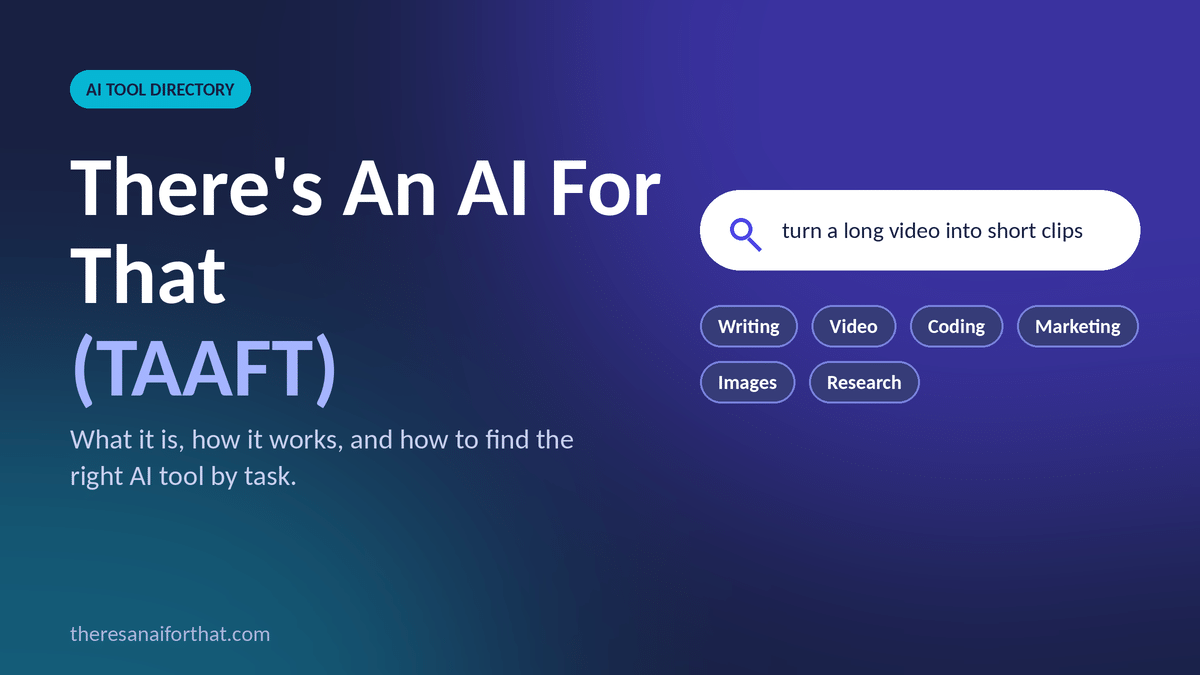
It’s an AI tool directory. You can find it at theresanaiforthat.com. The twist is how it’s organized: around tasks, jobs, and use cases rather than company names or vague categories.
So instead of scrolling an alphabetical list, you’d search for things like:
- writing blog posts
- making YouTube videos
- answering customer support tickets
- building presentations
- drafting marketing emails
- summarizing research
AlternativeTo describes TAAFT in similar terms: a big AI tools site meant to help people find solutions for specific jobs and workflows. That’s a fair summary. It’s less a catalog of software and more a way to go from “I need X done” to “here are some tools that say they do X.”
Why the task-first idea works
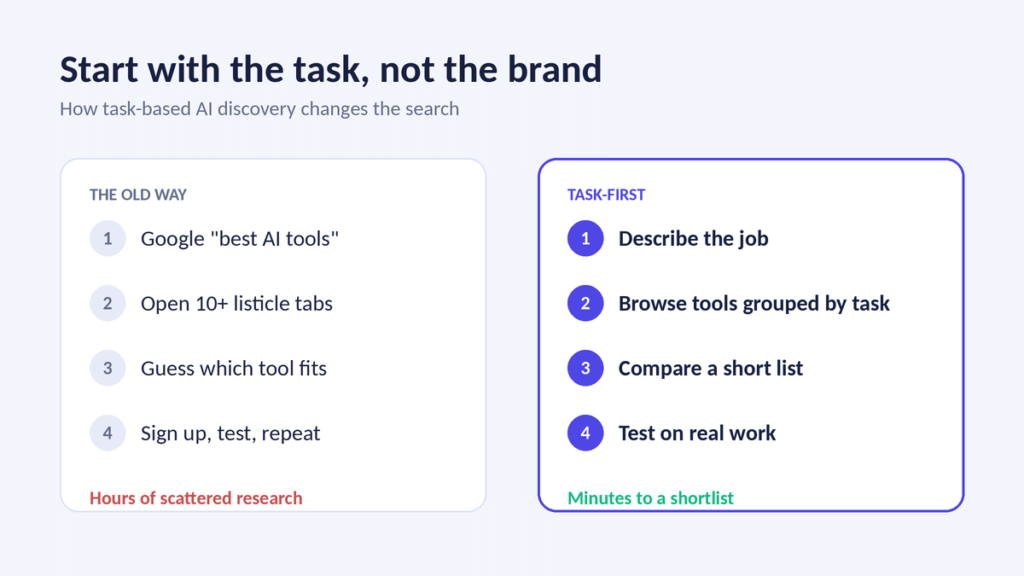
Think about how you’d normally look for something like this. You’d Google a question, open a few “best AI tools” articles, notice half of them are stuffed with affiliate links, and close most of the tabs. An hour later you’ve learned very little.
A task-based AI tools directory cuts that short. You describe the job, and you see tools grouped around it. You can compare a few and move on.
This matters most for people who don’t follow AI news. A teacher looking for lesson-planning help, a freelancer who wants faster proposals, a café owner who needs social posts. They don’t know the names, and they shouldn’t have to.
Why AI directories still matter in 2026
There are simply too many tools now. Writing, image generation, video, coding, research, automation, agents. Something new launches almost daily, and plenty of it is a thin layer on top of someone else’s model.
Finding an AI tool is easy. Finding a good one that’s still maintained next year is the hard bit.
That’s where AI directories earn their keep. They sit between the people building tools and the people who need them. A decent one groups similar products, gives you a quick summary, and saves you from starting cold. TAAFT is one of several. Futurepedia, Product Hunt, and AlternativeTo each come at it differently, and I’ll compare them in a minute.
What’s actually on there
The catalog shifts all the time, so I won’t pretend to list everything. The broad areas stay fairly steady:
Writing. Blog drafts, ad copy, emails, rewrites, summaries.
Images. Illustrations, marketing graphics, product concepts, social visuals.
Video. Generation, editing, avatars, subtitles, short clips.
Coding. Code generation, debugging, documentation.
Marketing. SEO, ads, lead generation, campaign planning.
Productivity and automation. Anything that cuts repetitive work or connects apps.
One useful side effect of the task-first setup is that you’ll often see several tools competing for the same job. That’s handy when you’d rather compare than commit to the first thing you click.
So what is There’s An AI For That?
It’s an AI tool directory. You can find it at theresanaiforthat.com. The twist is how it’s organized: around tasks, jobs, and use cases rather than company names or vague categories.
So instead of scrolling an alphabetical list, you’d search for things like:
- writing blog posts
- making YouTube videos
- answering customer support tickets
- building presentations
- drafting marketing emails
- summarizing research
AlternativeTo describes TAAFT in similar terms: a big AI tools site meant to help people find solutions for specific jobs and workflows. That’s a fair summary. It’s less a catalog of software and more a way to go from “I need X done” to “here are some tools that say they do X.”
Why the task-first idea works
Think about how you’d normally look for something like this. You’d Google a question, open a few “best AI tools” articles, notice half of them are stuffed with affiliate links, and close most of the tabs. An hour later you’ve learned very little.
A task-based AI tools directory cuts that short. You describe the job, and you see tools grouped around it. You can compare a few and move on.
This matters most for people who don’t follow AI news. A teacher looking for lesson-planning help, a freelancer who wants faster proposals, a café owner who needs social posts. They don’t know the names, and they shouldn’t have to.
Why AI directories still matter in 2026
There are simply too many tools now. Writing, image generation, video, coding, research, automation, agents. Something new launches almost daily, and plenty of it is a thin layer on top of someone else’s model.
Finding an AI tool is easy. Finding a good one that’s still maintained next year is the hard bit.
That’s where AI directories earn their keep. They sit between the people building tools and the people who need them. A decent one groups similar products, gives you a quick summary, and saves you from starting cold. TAAFT is one of several. Futurepedia, Product Hunt, and AlternativeTo each come at it differently, and I’ll compare them in a minute.
What’s actually on there
The catalog shifts all the time, so I won’t pretend to list everything. The broad areas stay fairly steady:
Writing. Blog drafts, ad copy, emails, rewrites, summaries.
Images. Illustrations, marketing graphics, product concepts, social visuals.
Video. Generation, editing, avatars, subtitles, short clips.
Coding. Code generation, debugging, documentation.
Marketing. SEO, ads, lead generation, campaign planning.
Productivity and automation. Anything that cuts repetitive work or connects apps.
One useful side effect of the task-first setup is that you’ll often see several tools competing for the same job. That’s handy when you’d rather compare than commit to the first thing you click.
How to find AI tools without wasting an afternoon
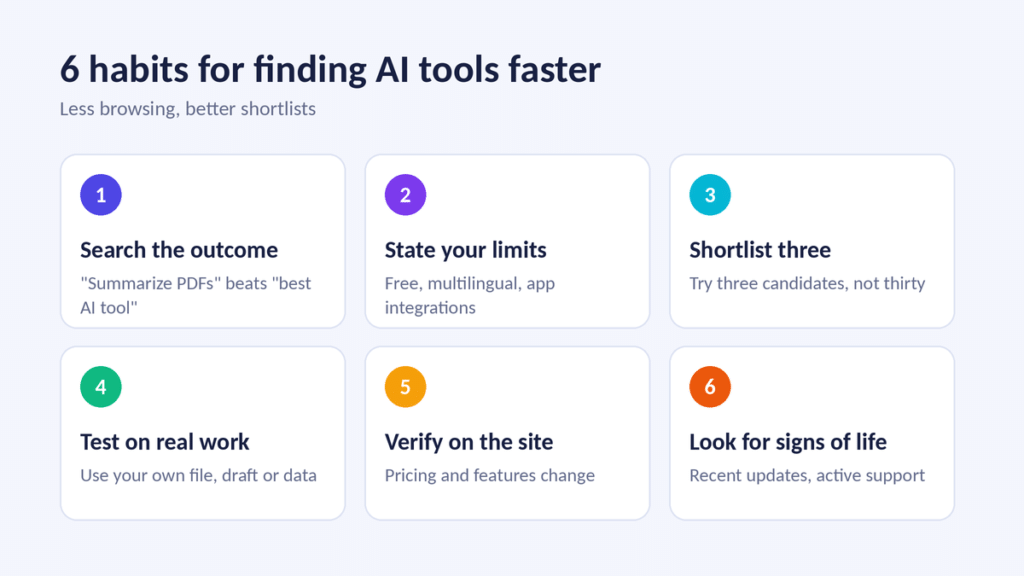
A directory only helps if you use it sensibly. A few habits that pay off:
Search for the outcome. “Turn a long video into short clips” gets you further than “best AI video tool.” The more specific the job, the better the matches.
Say what your limits are. Need it free? In another language? Connected to a specific app? Note that up front and check each listing for it.
Pick three, not thirty. Browsing feels productive, but it’s mostly procrastination. Choose three likely candidates and try each one.
Test with your own stuff. Demos are polished for a reason. Run the tool on a real recording, a real draft, a real spreadsheet. You’ll know within ten minutes whether it’s any good.
Double-check on the official site. Directory pages can go stale. Pricing, free limits, and features change, so confirm before you pay for anything.
Look for signs of life. Recent updates, an active blog, a support page that actually answers. An abandoned tool can look perfectly fine in a listing.
TAAFT compared with other AI directories
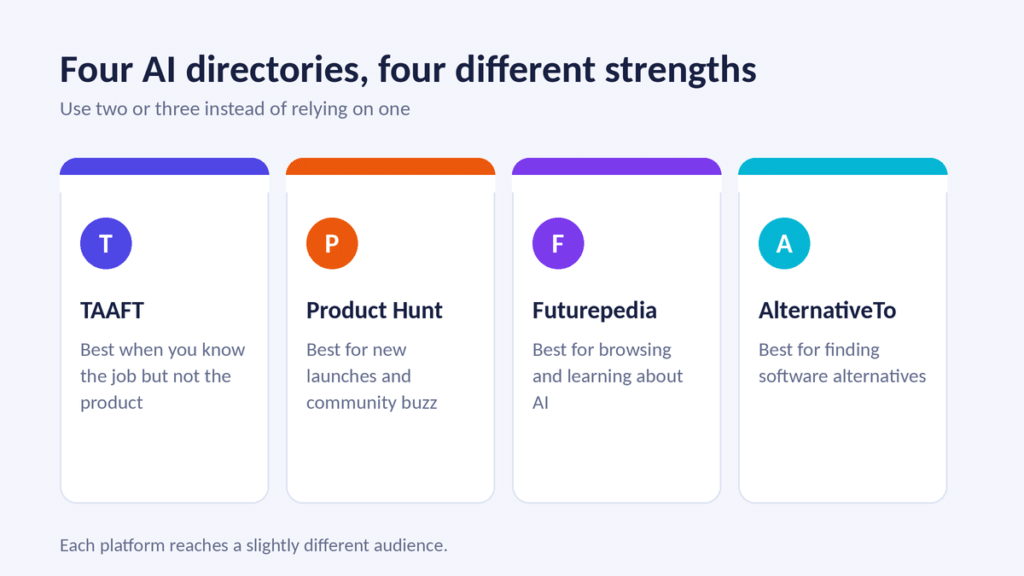
They’re not interchangeable, and I’d use more than one.
TAAFT is at its best when you know the job but not the product.
Product Hunt is built around launches and community votes. It’s good for spotting what’s new and seeing what people are excited about, though plenty of what’s there isn’t AI at all.
Futurepedia reads more like an AI discovery and learning resource. Handy if you want to browse and pick things up as you go.
AlternativeTo shines when you already use a tool and want a replacement. It also lists TAAFT among its AI discovery resources.
If you’re a user, try two or three and see which one fits how you search. If you’re a founder, the same logic applies in reverse: each one reaches a slightly different crowd.
If you’re building an AI product
TAAFT isn’t just for shoppers. If you’ve launched an AI SaaS product, a browser extension, an agent, or anything AI-powered, directories like this are one of the places people might stumble onto you.
A listing can bring some referral traffic, some brand exposure, and occasionally a backlink. I’ll be blunt, though: it’s not a magic trick. Whether you’re approved, where you show up, and whether the link passes any SEO value all depend on the platform’s policies and your listing, and those policies change. Anyone promising guaranteed rankings from a directory submission is selling something.
Get your materials together first
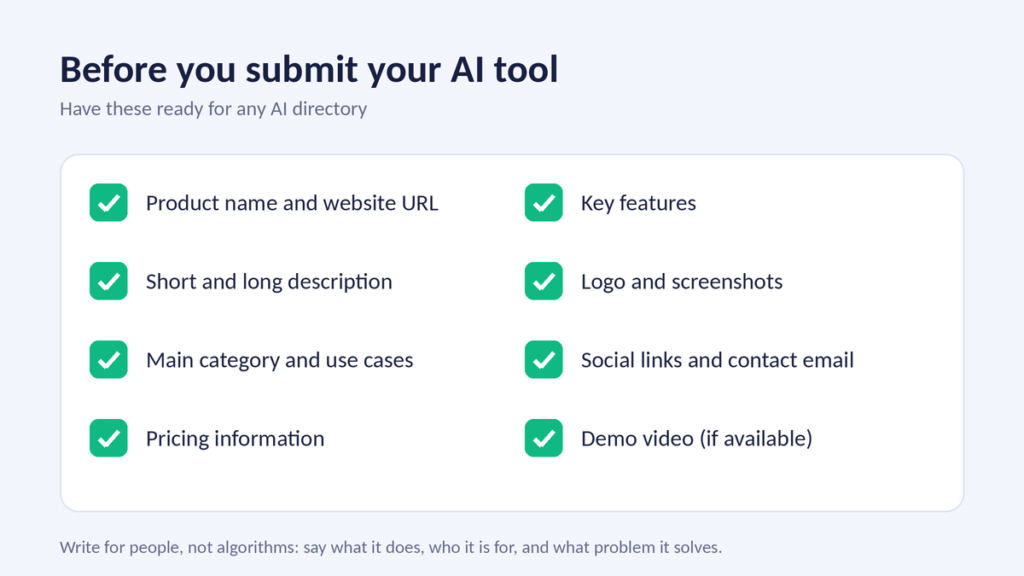
Every directory asks for slightly different things, but if you have this ready, each submission goes faster:
- Product name and URL
- A short description and a longer one
- Main category and use cases
- Pricing
- Key features
- Logo and screenshots
- Social links and a contact email
- A demo video, if you’ve got one
Write like a person
The most common mistake is keyword stuffing. “Best AI platform, powerful AI software for everything” says nothing. A reader skims past it and an editor rolls their eyes.
Say what the thing does. “Turns long webinar recordings into short captioned clips for social media” beats any string of superlatives. Who is it for? What problem does it solve? Answer those two questions and you’re most of the way there.
Do AI directories help SEO?
Sometimes. Not automatically.
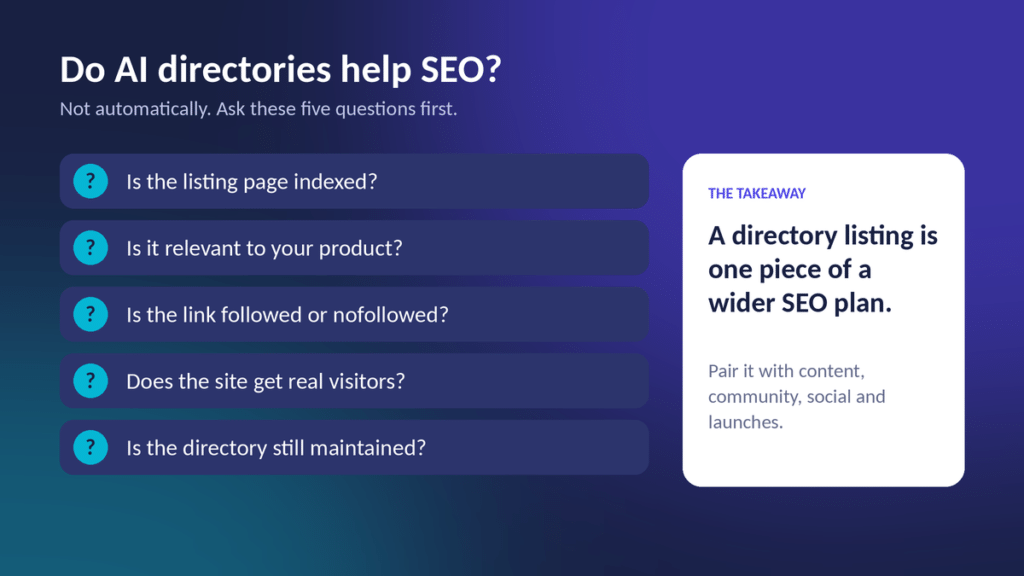
People tend to treat every directory as a backlink vending machine, and that’s where they go wrong. Before you count on a listing, ask a few things:
- Is the page indexed by search engines?
- Is it relevant to what you do?
- Is the link followed or nofollowed?
- Does the site get real visitors?
- Is anyone still maintaining it?
A followed link from a relevant, busy page can help. A nofollowed link on a dead site won’t do much. So treat directory submissions as one piece of a wider AI SaaS SEO plan, next to content, community, social, and launches. We go into more detail in our guide to AI directory submissions.
A quick checklist before you submit
- Open your site on a phone and a laptop. Make sure everything loads.
- Write a description a stranger would understand.
- Choose the one category that fits best, not five that sort of fit.
- Have a clean logo and a good screenshot ready.
- Read that directory’s current submission rules. They differ and they change.
- Keep your expectations sensible. A listing doesn’t promise traffic, leads, or customers.
Where AI Listingo comes in
Doing this by hand is slow. Every directory has its own form, account setup, category list, character limits, verification step, and approval process. Multiply that by dozens of sites and you’ve lost days you’d rather spend on the product.
AI Listingo handles manual AI, SaaS, and startup directory submissions so founders don’t have to. Take a look at the services page, browse the AI & SaaS blog, or start with our list of the Top 100 AI Directories to Submit Your AI Tool.
Is There’s An AI For That free?
I can’t give you a reliable answer, because features, sign-up requirements, and paid options on platforms like this change. Check the current site before you plan around anything. The same goes for submission options and pricing on any AI directory.
The short version
There’s An AI For That became a familiar name by flipping the question. Not “which product do you want?” but “what are you trying to get done?” For everyday users, that makes AI tool discovery a lot less intimidating. For founders, it’s one more place worth a look.
Just don’t hang your whole strategy on one directory. Pick a few that fit, pair them with content, SEO, and community, and be choosy about where you show up. My friend with the 200 product descriptions, by the way, found her tool in about twenty minutes. That’s the point of all this.
FAQ
What is There’s An AI For That?
TAAFT is an AI tool directory that helps people find tools by task, job, or use case instead of by company name.
What does TAAFT stand for?
There’s An AI For That.
Who can use it?
Anyone. Creators, marketers, developers, students, researchers, business owners.
How do I find AI tools on TAAFT?
Search for the task you want done, like “write product descriptions,” compare what comes up, and test a short list on real work.
Can AI startups submit their products?
Many AI directories accept submissions, though rules and approval policies vary.
Does a listing guarantee backlinks or SEO results?
No. Outcomes depend on the directory, your listing, and your wider marketing.
Why use more than one AI tools directory?
Different directories reach different audiences. Stay selective and stick to ones that suit your product.
Where can I find more AI directories?
Try our Top 100 AI Directories guide, then look for ones that match your category.