
Picture a founder who spends half a year on an AI writing tool. Late nights, a redesigned dashboard, three pricing experiments. Launch day arrives, she posts everywhere, and by evening the analytics show maybe forty visits. Most of them are her own friends.
I’ve seen versions of this story a lot, and the product is rarely the culprit. People just didn’t know it existed.
That’s the reason Product Hunt still matters. It’s one of the few places where people show up on purpose to look at new software. But when founders ask me about Product Hunt AI SaaS growth, my answer is usually the same: treat it as the first push, not the whole plan. The launch gets you seen. What happens next decides whether anyone sticks around.
Why Product Hunt Is Still Worth Your Time
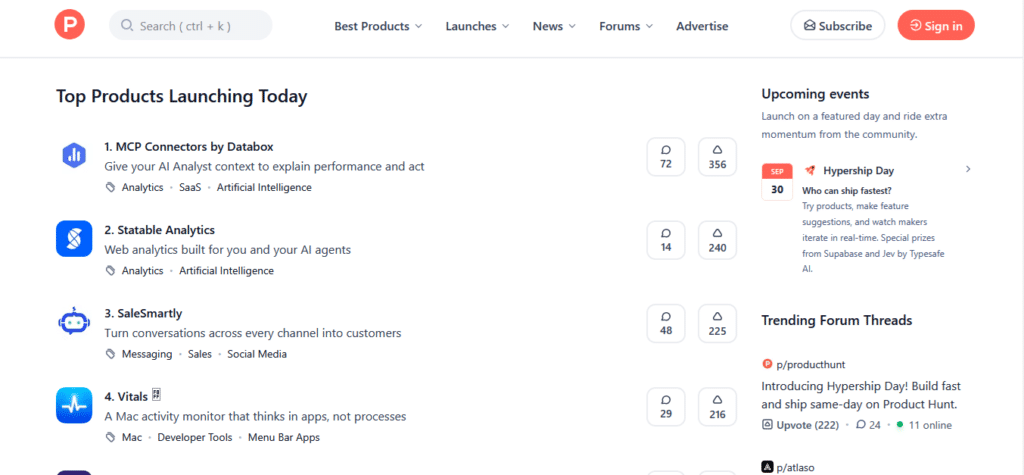
Product Hunt is a place to show off new products. You post yours, explain what it does, and answer questions as they come in.
Who shows up? Mostly founders, developers, designers, marketers, and people who just like trying tools. If you’re building something in AI or SaaS, that’s about as friendly a room as you’ll find. They get it. Half of them will forgive a rough edge if the idea is good.
Now, temper your expectations. One launch won’t hand you hundreds of paying customers. Sometimes it brings a nice wave, sometimes a trickle. What you do get is a crowd of strangers who’ll tell you, sometimes bluntly, what they think.
That’s the real prize early on. Maybe everyone loves the one feature you almost cut. Maybe nobody understands your pricing. Maybe three people ask about the same integration within an hour. When you’re still hunting for product-market fit, comments like that beat a traffic spike every time.
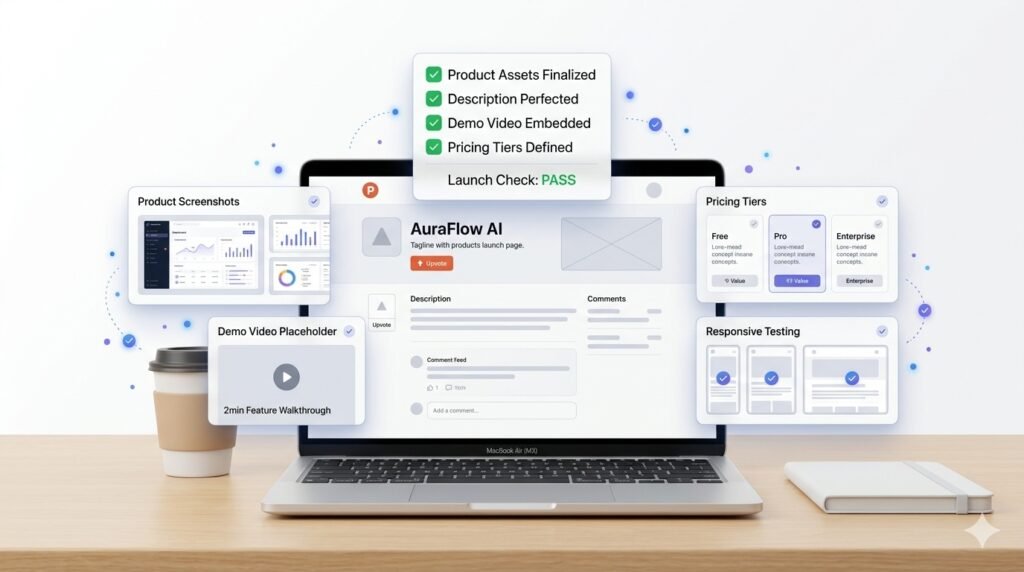
Wait Until the Product Is Actually Ready
Yes, you can launch the day the thing works. Please don’t.
Someone arriving from Product Hunt has never heard of you. They give the page a few seconds. If they can’t tell what the product does in that time, they’re gone, and they won’t come back to check.
So before launch, go through it like a stranger would:
- Does the homepage say what the product does, right away?
- Does signup work on a phone, on Safari, on the slow laptop?
- Is the pricing something a person can read once and understand?
- Are your screenshots real, or stock-looking marketing art?
For AI tools especially, record a short demo. Thirty seconds is plenty. Someone types a prompt, something useful comes out. That clip explains more than any paragraph you’ll write.
And drop the press release voice on your listing. Tell people what you made, who it’s for, and why you bothered. The why is what sticks. Product Hunt has its own launch guide if you want to see how they suggest setting things up.
Stop Obsessing Over Upvotes
Almost every Product Hunt article ends up asking how to get more upvotes. I think that’s the wrong thing to chase.
Sure, a good ranking helps people find you. But an upvote from somebody who never opens your product is just a number. Given the choice, I’d take twenty curious people who actually try the tool over three hundred who tapped a button and left.
There’s also a rules issue. Product Hunt discourages paid votes, incentives, and coordinated campaigns, so copying the same “please upvote!” message to your entire contact list is more likely to hurt than help. Ask the people who’d truly care instead. Customers. Beta testers. The folks in communities where you’ve been useful for a while.
Then be there all day. Answer comments fast, and answer them like a person. If someone finds a bug, thank them and fix it. If the same question keeps coming up, your page isn’t clear enough, so change the page right then. You have an attentive audience for maybe twenty-four hours. Talk to them.
Before Launch Day
You don’t need a massive campaign. You do need to avoid dumb mistakes.
Get your page and images ready. Test the site and make sure signup won’t fall over when traffic jumps. Check your analytics, your forms, your pricing page. Open the product on a couple of different devices.
Then tell the people you already have: your email list, followers, customers, community members. Give them a heads up that you’re launching. Product Hunt works better when some people arrive already interested.
The boring checks matter more than they seem. Imagine finally getting a rush of visitors and watching them bounce off a broken signup button. That one hurts.
The Part Most Founders Skip
Here’s where it usually goes wrong. The launch ends, the founder refreshes stats for two days, feels good or bad about the numbers, and moves on.
But the launch page fades. Your website doesn’t. The weeks that follow matter as much as the day itself.
Reread every comment. What did people ask? Which feature got attention? What problems did they describe, in their own words? That’s a free list of blog topics, landing page copy, and product fixes. If five people asked how you compare with a competitor, you’ve just found your next article.
It’s also a good moment to show up in other places. An AI productivity tool, for instance, can get found through AI and SaaS directories long after Product Hunt has moved on. Our list of the top 100 AI directories to submit your AI tool is a decent starting point for deciding which ones deserve the effort. And the AI & SaaS blog covers more on marketing, SEO, and getting noticed.
Submitting to directories one at a time gets tedious fast. If that’s you, there are AI and SaaS directory submission services that handle it so you can get back to building.


Product Hunt and SEO Aren’t Rivals
They’re really different animals, which is why they fit together.
Product Hunt is a burst. A day of noise, then quiet. SEO is slow, but a good article can pull in readers for years.
Say you launched an AI video generator. You could keep posting “check out our tool,” or you could write about what people already search for: making videos with AI, editing faster, text-to-video software, tools for marketers. Those pages keep working while you sleep.
And your launch comments tell you what to write. The questions people asked you are usually the same ones they type into Google. Answer them well on your own site and you’ll reach people who never saw your Product Hunt page.
Same idea for directories, review sites, and communities. Skip the ones nobody in your audience uses. A handful of good places beats fifty random ones.
A Simple Plan You Can Follow
Short version, if you just want the checklist.
Before launch, make the product easy to understand, prepare your page, test the site, and warn your existing audience.
On launch day, stay online. Answer everything. Watch what people do, not only how many votes you have.
After launch, fix what confused people, turn common questions into content, submit to the right directories, and keep at SEO.
One more habit: keep a feedback log. Date, comment, what you did about it. A note from one early user can seem small now, and six months later it explains why you rewrote your homepage.
Don’t Bet Everything on One Platform
Product Hunt is helpful, but leaning on any single source of traffic is risky. Depending on your product, look at G2, Capterra, AlternativeTo, BetaList, and Indie Hackers, plus AI-specific directories.
You won’t need all of them. A developer tool and an AI image generator have different audiences, so they need different plans. Pick the place where your users already hang out, get good there, then add another. Trying to be everywhere at once mostly means being bad everywhere.
For more resources on visibility, AI Listingo is worth a look.
The Takeaway
Product Hunt AI SaaS growth begins with the launch and continues long after. What matters is what you learn in those first days and what you do with it.
Find early users. Listen. Fix the obvious stuff. Then take that momentum into SEO, content, directories, and communities.
A launch lasts a day. Your growth plan needs to last a lot longer.