
Try typing “AI video editor” into Google. You’ll get dozens of tools with nearly identical landing pages, and every one of them claims to save you hours. By the third tab you’ve forgotten what the first one did. That’s more or less the problem Futurepedia exists to solve.
I’ll cover what it is, who gets value from it, and how directory submissions fit into a startup’s marketing. I’ll also say where they don’t help, because plenty of guides skip that part.
So, what is Futurepedia?
Futurepedia is a website where you can browse AI tools sorted by category and use case. Writing, video, design, marketing, research, coding and general productivity are all covered. It also publishes educational material on using AI for actual work, which makes it more than a long list of links.
The idea is simple. The AI software market is messy. No single product owns any one task, and new ones launch every week. Someone who needs an SEO assistant, or a student who wants a decent summarizer, doesn’t know where to begin. Browsing a category gives them a shortlist in ten minutes instead of a whole afternoon.
Search engines can do this job too, but they reward whoever has the best SEO. That’s not always the best product for you, and sometimes it isn’t even close.
Why directories keep popping up
AI now touches almost every digital workflow: writing, images, voice, sales, customer support, data analysis, automation. Nobody can follow all of it, and I doubt anyone who claims to is being honest.
Directories work because people often know the job they need done but not the name of a tool that does it. “I need something that turns a blog post into a short video” is a category search, not a brand search, and a directory handles that well.
For a startup the appeal is obvious. A brand-new product has no reputation and a website Google hasn’t learned to trust. A directory can be one more place where a stranger stumbles across you.
What you’ll find there
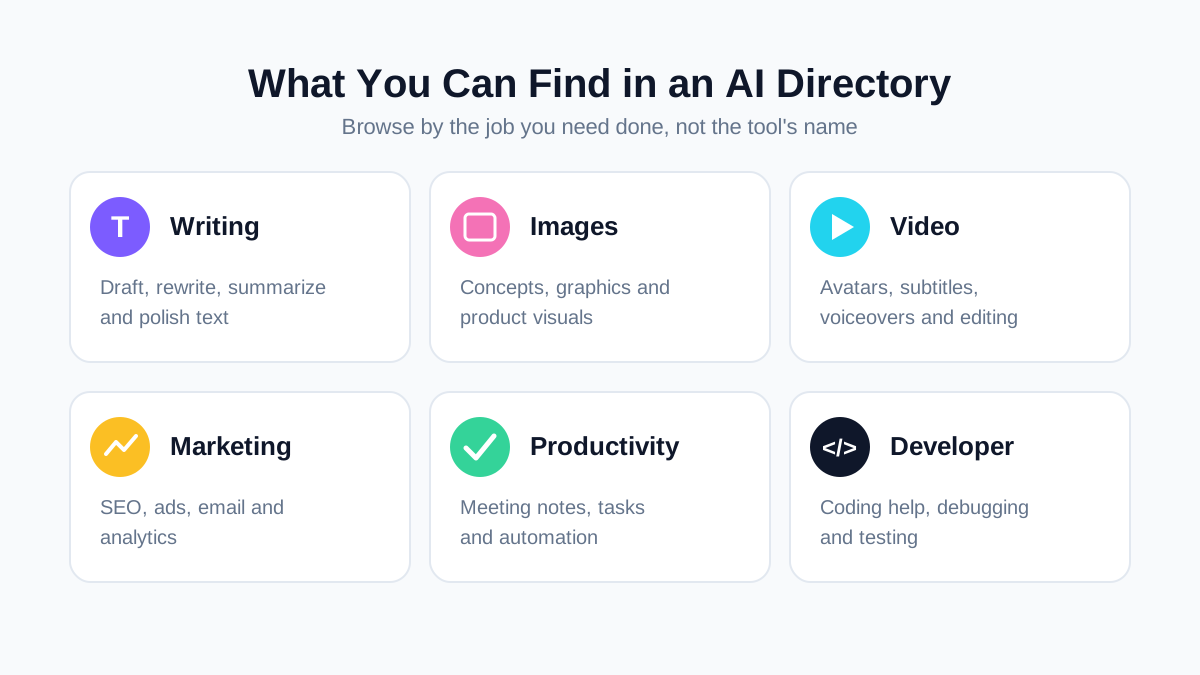
The writing category is probably the most crowded. Those tools draft, rewrite, summarize and polish text, and bloggers, students and content teams all use them. Image generators are next. Designers and marketers use them for concept art, social graphics and product mockups, and they tend to check directories often just to see what’s new.
Video is the noisy one. Avatars, subtitles, voiceovers, editing and animation all have tools, and they overlap heavily. Comparing them side by side helps a lot here.
Marketing tools cover keyword research, ad copy, email and analytics. Productivity tools handle meeting notes, task management and document summaries. Then there are developer tools, like coding assistants, debugging helpers and test generators. Developers are picky, so they usually compare several before committing.
It’s a research tool, too
Most people think of a directory as a place to find software. Founders should also use it for competitor research.
Say you’re building a writing assistant. Spend an hour in that category and you’ll see how competitors describe themselves, which features they lead with, who they seem to be targeting and where they’ve put themselves. You’ll probably notice gaps as well, like a use case nobody talks about. It doesn’t replace real market research, but it’s cheap and often eye-opening.
Can you submit your tool?
Founders ask this constantly. The answer is to check the site. Submission rules change, and old blog posts (including this one) go stale. The official site will have the current process.
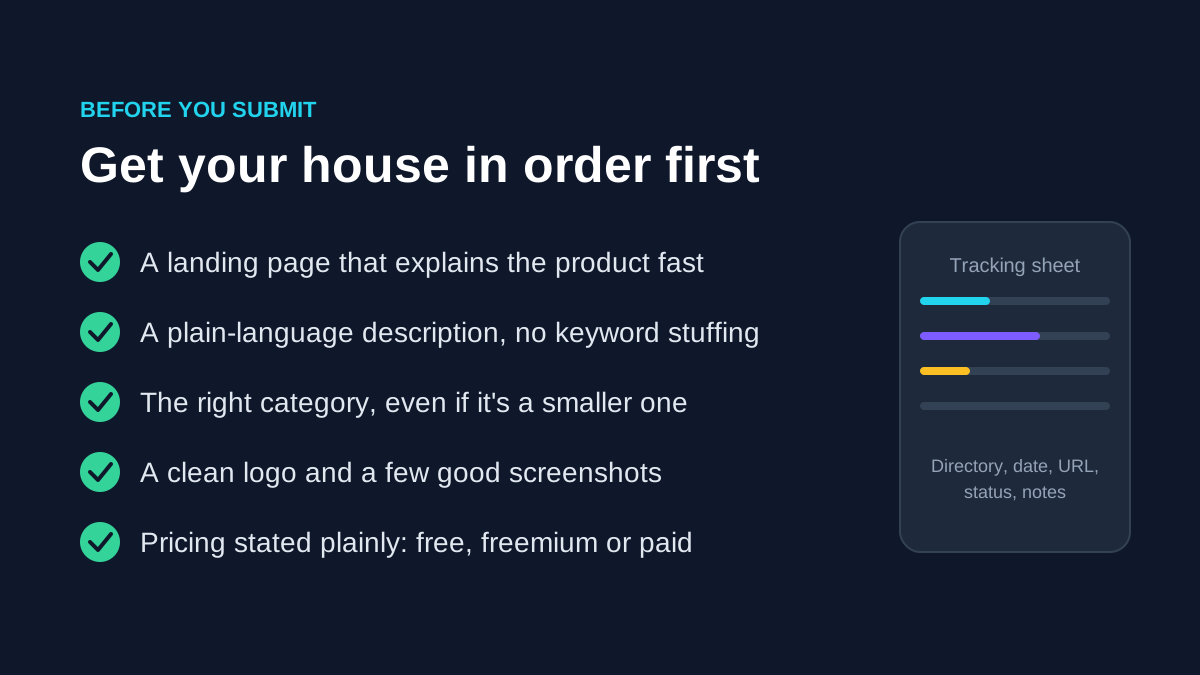
Whichever directory you submit to, you’ll usually want the following ready:
- Product name and URL
- A short description and a longer one
- The main category and use cases
- A logo and a few screenshots
- Pricing details
- A contact email
Keep all of that in one document and you’ll save a lot of copy-pasting. Also, submitting doesn’t mean you’ll be accepted. The directory decides what gets listed and how it looks.
Why founders submit at all
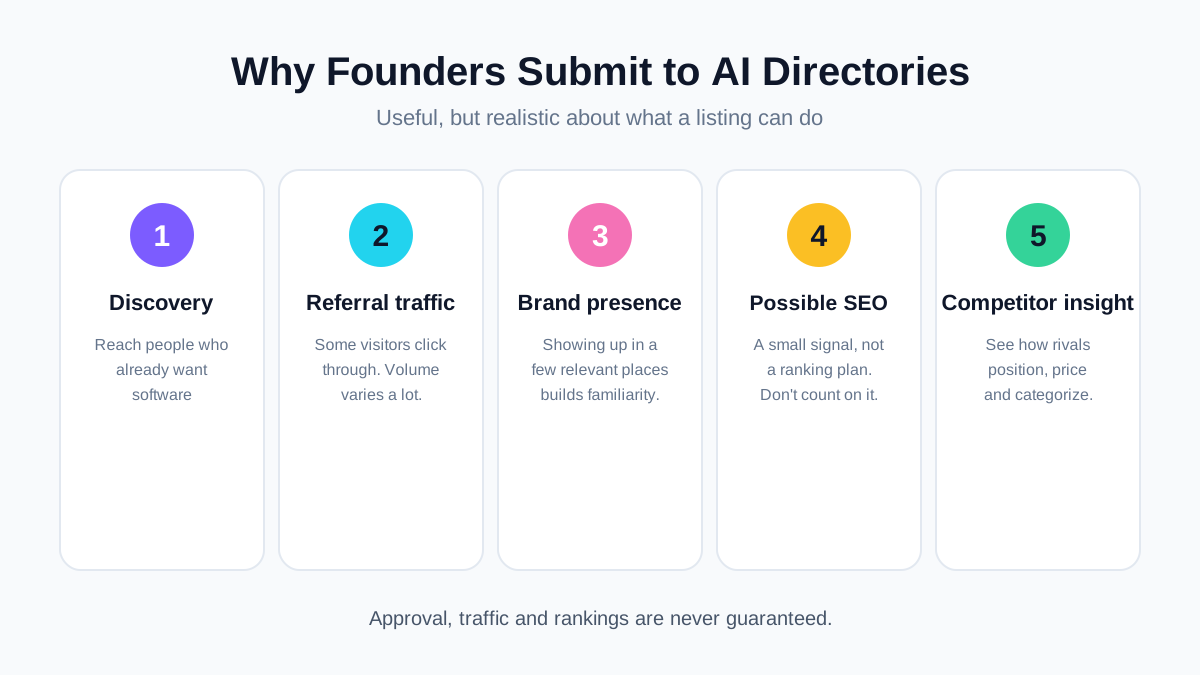
Nobody should promise you that a directory listing will change your business. There are still reasonable reasons to do it.
The first is discovery. People browsing a directory are already looking for software, which is a warmer audience than a random social post. The second is referral traffic. If the listing links to your site, some people will click. How many depends on the directory’s audience, your category and how visible your listing is, so the numbers swing a lot.
Brand presence counts for something too. When a new company shows up in several relevant places, it feels more real, even if no single listing brings much traffic.
Then there’s SEO, where people get carried away. Some directories link to the products they list, and it’s tempting to assume every backlink lifts your rankings. It doesn’t work like that. Search engines weigh plenty of signals, and a directory link is a small one. If it helps, great, but don’t build a plan around it.
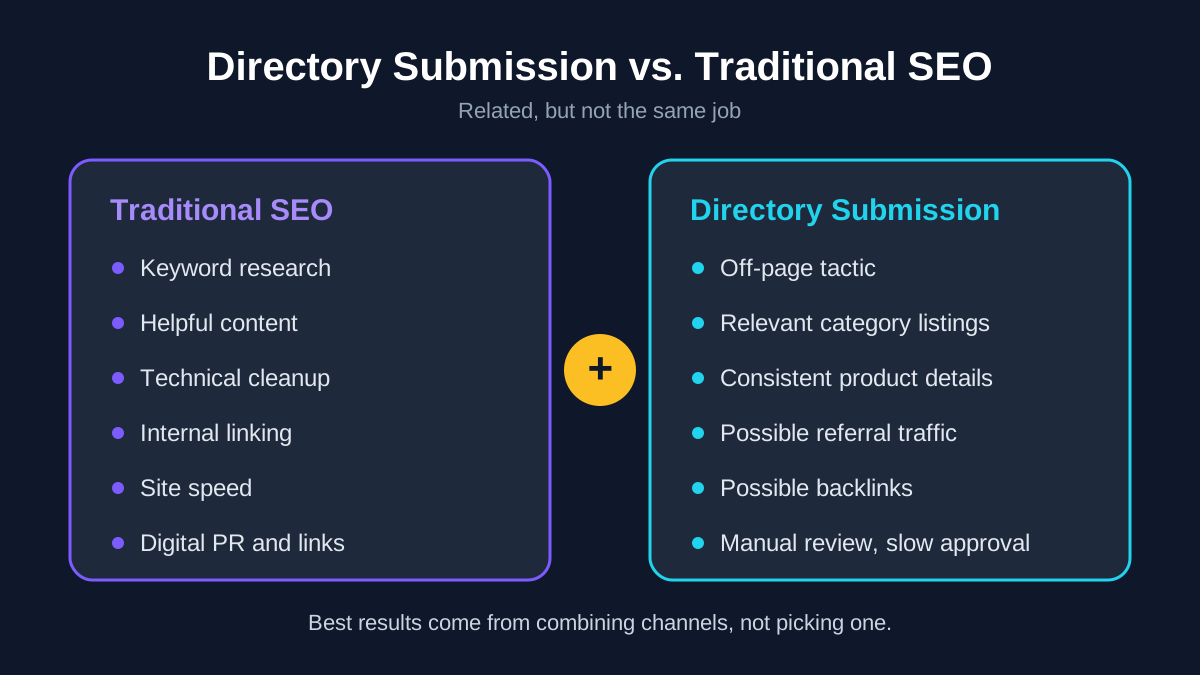
Directories and SEO are different things.
Traditional SEO means keyword research, useful content, technical cleanup, internal linking, site speed, digital PR and link building. Directory submission is just one off-page tactic among those.
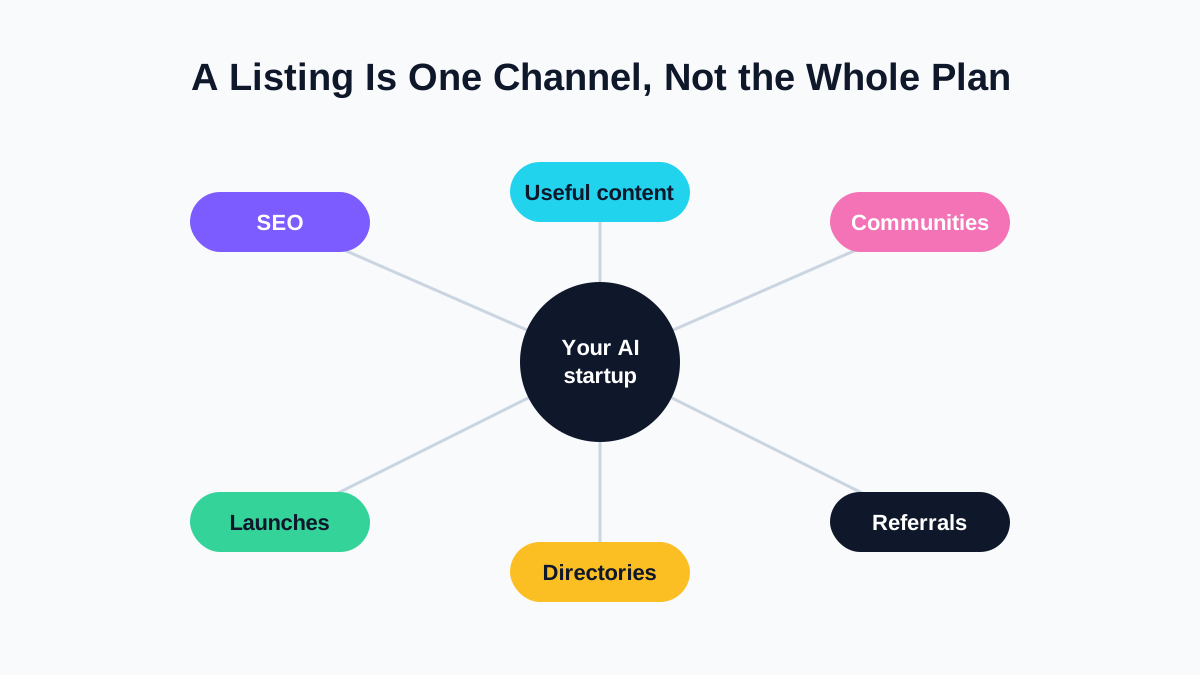
A realistic plan for an AI startup mixes several. Write helpful articles, tighten your product pages, show up in communities where your users hang out, and submit to a handful of directories that fit. No single channel carries the whole load. For more on directories and SaaS marketing, the AI Listingo AI & SaaS Blog has a decent archive.
Get your house in order first
A listing is only as good as the page it sends people to. Before you submit anywhere, check these.
Your landing page has to explain the product quickly. If a visitor can’t tell what you do, who it’s for and why it matters within a few seconds, they’re gone. Your description should sound like you’re explaining it to a friend, not like you’re trying to hit a keyword count. Say what it does, who it helps, what problem it solves and why someone should try it.
Category matters more than people think. An AI meeting assistant listed under image generation will confuse everyone and get ignored. Better to be in a smaller, correct category than a big, wrong one.
Have a clean logo and a couple of good screenshots on hand, because a weak image makes a listing look abandoned. And state your pricing plainly. Free, freemium or paid, just say so. Nobody enjoys hunting for it.
Where AI Listingo fits
Finding directories is the easy part. The time sink is filling out forms, tracking what’s pending and following up.
AI Listingo offers manual AI and SaaS directory submission for AI tools, SaaS products, startups and software businesses. It works by hand rather than with automated bulk tools, and you can read about the process on the directory submission services page. If you’d rather research on your own first, there’s a guide to the Top 100 AI Directories to Submit Your AI Tool.
A caution that applies to any service like this: each directory controls its own approvals. Nobody can guarantee a listing, a particular backlink, a ranking, a traffic number or a customer count. If someone promises those, walk away.
Other places worth a look
Futurepedia is one of many places where software gets found. Depending on your product, you might also look at Product Hunt, which is popular for launches and early adopters, and AlternativeTo, where people go when they’re leaving a competitor. G2 and Capterra lean toward reviews and business buyers. SaaSHub and various niche directories are worth checking too.
Each of these draws a different crowd. Choose based on where your customers actually spend time, not on which list looks longest.
A few habits that save headaches
Research a directory before you submit, and skip the ones that don’t fit. Use the same product name, URL, description and pricing everywhere, because inconsistency looks sloppy. Don’t spam low-quality sites just to pad a number.
Keep a simple spreadsheet or Airtable with the directory name, date, listing URL, status and notes. Trust me, after the twelfth submission you won’t remember which ones are still pending. Read each site’s guidelines, too, because every platform has quirks. And be patient, since some directories review by hand and approval times vary.
If you take one thing from this list, make it relevance. Five well-matched listings will do more for you than fifty random ones.
The bigger picture
AI discovery platforms will probably stay useful as long as the market keeps growing. People need help cutting through the noise, and companies need a way to reach people who don’t know they exist. Futurepedia sits between those two needs.
Still, a listing on its own isn’t a growth strategy. The startups that do well tend to combine several things: good SEO, genuinely useful content, a solid product, active communities, partnerships, launches and referrals from happy customers. Directories help, but they play a supporting role.
Wrapping up
If you’re researching AI tools, Futurepedia is a good name to know. If you’re a founder, it’s a fair place to study your market and, where submissions are open, to consider introducing your product.
Start with the basics: a clear website, an honest description, decent visuals and accurate details. Then pick directories because your audience is likely to be there, not because a blog post told you to. Keep your expectations realistic, and treat each listing as one small piece of a longer effort.
Disclaimer: Directory policies, submission requirements, listing availability and approval processes can change. Always check current requirements directly with the relevant directory. Submitting or listing an AI tool does not guarantee approval, backlinks, search rankings, traffic, leads or sales.